Why Do Some Nations Prosper While Others Remain Trapped in Crisis?
Why is it that some countries enjoy decades of stability, growing wealthier and planning 20 years into the future, while others find themselves trapped in an endless cycle of crisis?
It has nothing to do with a “national genetic code.” And it is certainly not about mysticism.
It is about the compounding effect of choices. It is about unacknowledged mistakes. It is about habits passed down not through DNA, but through history.
To put it bluntly: every nation holds an account. And that account cannot be ignored.
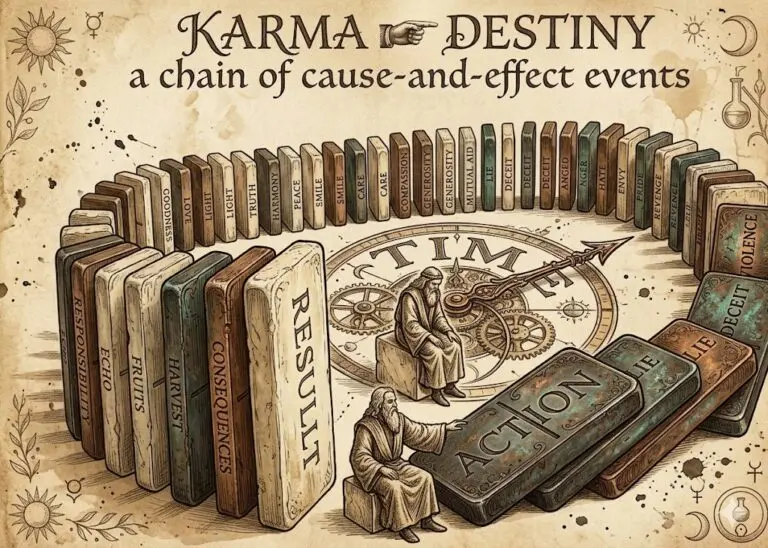
This is not “bad luck.” It is not a coincidence. It is the cumulative result of past decisions—a form of “karma,” but in a historical rather than a mystical sense.
“National Karma” Demystified
Imagine that a country has an invisible balance sheet.
- Every decision is an investment.
- Every consequence is interest accrued.
- Every unacknowledged mistake is a debt.
This “account” cannot be settled with words or slogans; it can only be balanced through real, structural change. The longer a nation pretends everything is fine, the higher the ultimate cost of reckoning becomes.
History does not punish. It simply repeats what has left uncorrected.
LATEST ARTICLES
Explore bold questions about life, creation, belief, and the mysteries of our existence.
Start exploring by country
Choose a country and explore how history, language, myths and institutions shape its national karma.
Featured Essays on National Karma
Core readings on how nations repeat, resist and transform their historical patterns.
Why Was Sex Made So Irresistible?
What If Earth Was Created Not by God, but by Satan?
How Many Times Did Life Arise on Earth?
The Karma of India
New Articles in Stories
New readings of myths, fairy tales and legends that reveal what nations fear, admire, forgive and repeat.
Ukraine – The Stories That Shaped Its Karma
Japan – The Stories That Shaped Its Karma
Iran – The Stories That Shaped Its Karma
France – The Stories That Shaped Its Karma
New Articles in Language Vibrations
New explorations of words that teach people how to feel, obey, resist, dream and survive.
Ukraine – Language Vibrations
Japan – Language Vibrations
Iran – Language Vibrations
France – Language Vibrations
The Verdict
National karma is neither a life sentence nor a myth. It is the predictable outcome of repetition