The Stories That Shaped Its Karma: Ukraine
Sometimes a nation’s fairy tales are not bedtime stories. They are survival manuals written for people who were never allowed to feel fully safe.
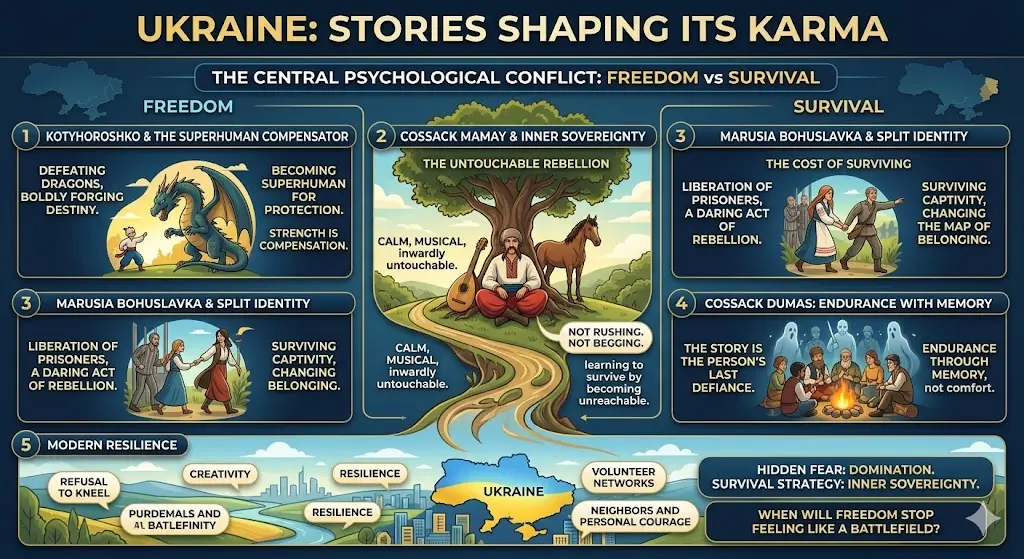
Ukraine’s central psychological conflict is painfully clear: freedom versus survival. Not freedom as a slogan, but freedom as a nervous system. The right to breathe, speak, own land, keep memory, protect dignity and still remain alive when stronger powers keep arriving at the door.
Take Kotyhoroshko, the miraculous boy born from a pea, small in origin but enormous in force. On the surface, he is the classic folk hero: brave, strong, destined to defeat the dragon. But the shadow side is sharper. Ukraine’s imagination does not trust ordinary protection. The child must become superhuman because the world is too dangerous for a normal child. Strength is not ambition here. It is compensation.
Then there is Cossack Mamay, sitting calmly with his kobza, horse, weapons and silence. He is not rushing. He is not begging. He is armed, musical and inwardly untouchable. The uncomfortable truth: this is the fantasy of a person who has learned to survive by becoming unreachable. Don’t expose your fear. Don’t explain too much. Keep your soul under the tree, your weapon nearby and your song inside your chest.
Marusia Bohuslavka is even more disturbing. Captured, adapted, placed inside the enemy’s world, she frees imprisoned Cossacks but does not leave with them. This is not a simple tale of betrayal or heroism. It is about the split identity of someone who survives captivity so long that rescue becomes complicated. The shadow lesson is brutal: sometimes survival saves the body but changes the map of belonging.
And listen to the Cossack dumas, those long songs of captivity, loss and return. They do not teach comfort. They teach endurance with memory. They say: you may lose your land, your family, your name, but if the story remains, the person is not fully conquered.
Sounds familiar, doesn’t it? The stubborn independence. The suspicion of power. The emotional intensity around language, land, songs, graves, borders and dignity. The talent for improvisation. The habit of not trusting official structures completely, but trusting networks, families, volunteers, neighbors and personal courage.
The master key is Cossack Mamay. He is the Ukrainian psychological portrait in one image: calm outside, armed inside, wounded but ironic, lyrical but dangerous. His hidden fear is domination. His survival strategy is inner sovereignty.
In modern life, this can become brilliance: resilience, creativity, refusal to kneel. But it can also become exhaustion: living as if peace is temporary, authority is suspicious and softness is unsafe.
Ukraine’s old stories ask one haunting question: how many generations must defend freedom before freedom stops feeling like a battlefield?