
Our Method
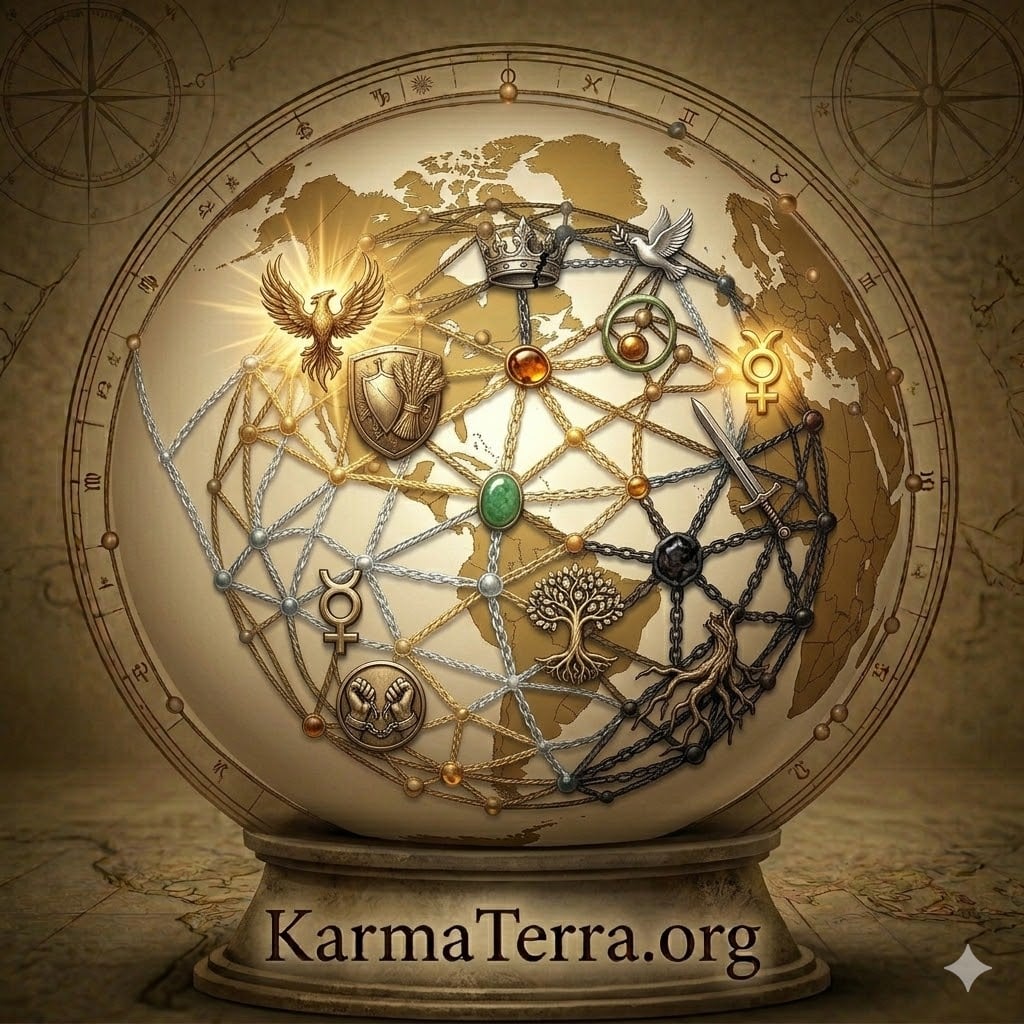
KarmaTerra is a cultural atlas of countries, memory and consequence.
We explore countries through history, language, myths, collective memory and institutions. The goal is not to judge nations, rank them or reduce people to stereotypes. The goal is to understand the patterns that countries repeat across time.
The word “karma” is used here as a metaphor.
It does not mean mysticism. It means consequence.
Every country carries the results of past choices, inherited habits, historical wounds, cultural stories and institutional patterns. Some of these patterns help a society grow. Others return again and again as unresolved problems.
KarmaTerra studies those patterns.
What KarmaTerra Is
KarmaTerra is an independent cultural essay project.
It looks at countries as living systems shaped by memory, language, stories and institutions. We ask how a society remembers its past, what it fears, what it values, what stories it tells about itself and what kinds of behavior its institutions reward.
Our essays combine cultural psychology, historical memory, folklore, language and political culture.
We do not claim to give final answers. We offer interpretive maps.
A country is never just a territory. It is also a memory system, a language field, a collection of stories, a structure of habits and a history of consequences.
What KarmaTerra Is Not
KarmaTerra is not nationalism.
It is not mysticism.
It is not political propaganda.
It is not a claim that every person from a country thinks or behaves the same way.
It is not an attempt to rank nations as better or worse.
It is not ethnic essentialism.
Countries are complex. Every nation contains many regions, classes, minorities, generations, conflicts and contradictions. No single article can represent everyone.
KarmaTerra studies recurring patterns, not fixed national character.
The Four Lenses
KarmaTerra reads each country through four main lenses.
1. History
History creates long shadows.
Wars, empires, revolutions, occupations, victories, defeats and reforms do not disappear when the event is over. They leave emotional lessons. They shape trust, fear, pride, shame and expectations from power.
KarmaTerra asks not only what happened, but what a society learned from what happened.
2. Language
Language shows what a culture has learned to name.
Certain words carry deep emotional and social codes. They reveal attitudes toward freedom, family, work, money, shame, fate, authority, dignity and survival.
KarmaTerra studies words and expressions that are more than vocabulary. They are cultural clues.
3. Myths and Stories
Stories are never just stories.
Fairy tales, legends, national myths and popular narratives often carry old survival instructions. They show what a culture admires, fears, forgives or justifies.
Some stories teach patience. Some teach rebellion. Some teach cleverness. Some teach sacrifice. Some teach distrust.
KarmaTerra reads these stories as psychological scripts.
4. Institutions
Institutions are where culture becomes practical.
Laws, bureaucracy, schools, business habits, political systems and everyday rules show what a society truly rewards and tolerates.
A country may speak about freedom while organizing life around control. It may praise merit while rewarding loyalty. It may value law while depending on informal arrangements.
Institutions reveal the habits that have become structure.
Why This Is Not Nationalism
KarmaTerra does not say that nations have fixed souls.
It does not say that one country is superior to another. It does not turn culture into pride, blame or propaganda.
To study a country critically is not to attack its people. To notice a repeated pattern is not to accuse every citizen. To describe a historical wound is not to reduce a nation to victimhood.
Nationalism often turns culture into a weapon.
KarmaTerra treats culture as a field for understanding.
The purpose is not national pride or national shame. The purpose is self-awareness.
Why This Is Not Mysticism
The word “karma” can sound spiritual, but in KarmaTerra it is used as a public metaphor for cause and effect.
Historical choices have consequences.
Institutional habits have consequences.
Silence has consequences.
Myths have consequences.
Language has consequences.
A country that avoids difficult truths may pass confusion to the next generation. A country that glorifies suffering may struggle to build ordinary happiness. A country that fears disorder may create too much control.
These are not curses.
They are patterns.
And patterns can be studied, questioned and changed.
A Way of Reading Countries
KarmaTerra does not offer final verdicts.
It offers a way of reading countries through the deeper forces that shape public life: memory, language, stories and institutions.
Every country has visible politics.
But beneath politics there are older patterns.
KarmaTerra looks there.